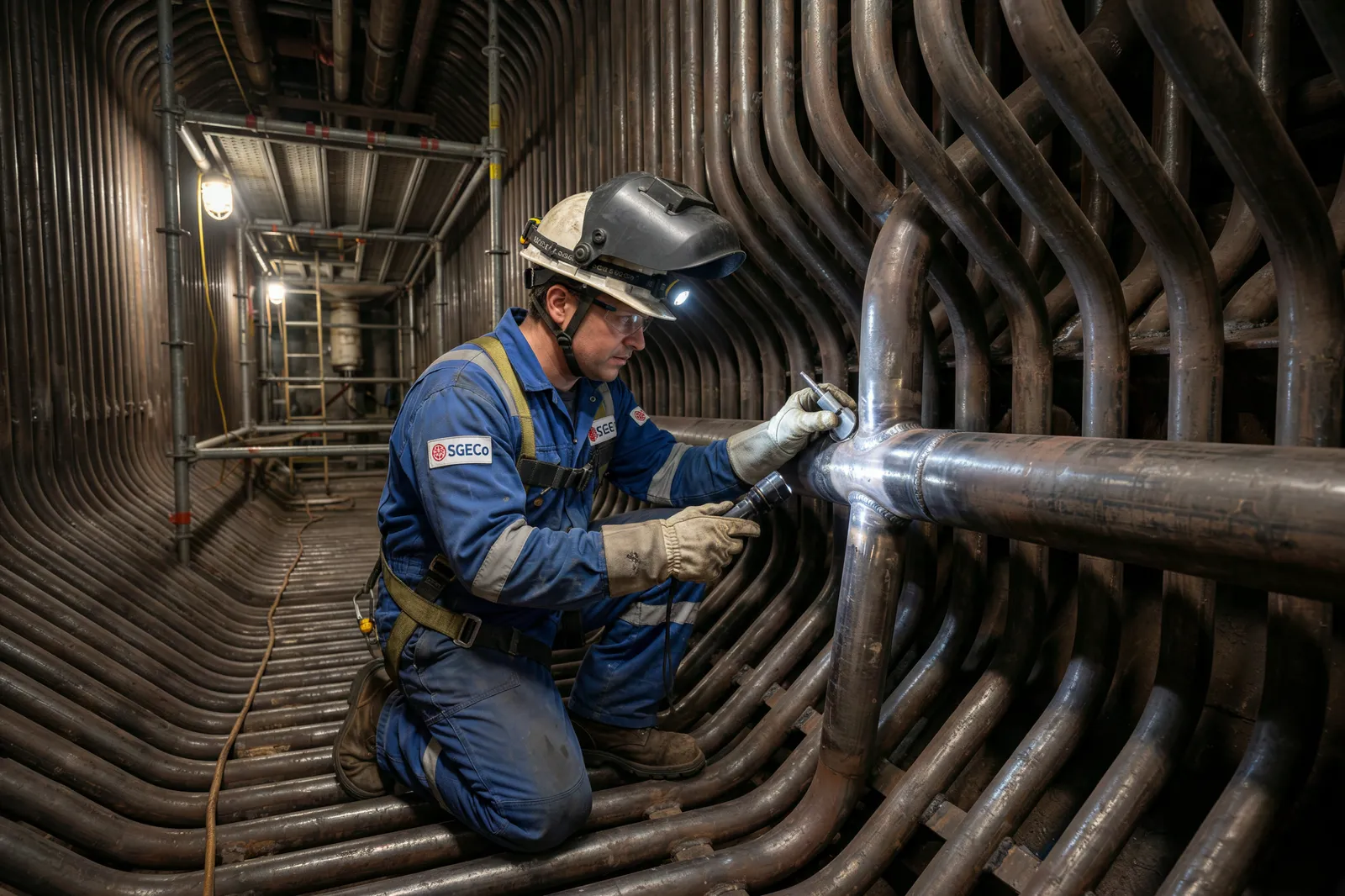
What is the annual IBR inspection?
In India, a steam boiler may only be used while it holds a valid certificate issued under the Boilers Act and the Indian Boiler Regulations (IBR). That certificate is issued for a limited period — usually up to twelve months — after the boiler has been inspected by the Directorate of Boilers of the state. Renewing it every year is the annual IBR inspection.
The inspection covers the boiler and its pressure parts, mountings and fittings, and the IBR steam piping connected to it. For combined-cycle and process plants this includes heat recovery steam generators (HRSGs) and waste heat boilers, which are boilers in the eyes of the law even though they have no burners of their own.
Who is responsible?
The owner of the boiler is responsible for applying for the inspection in time, preparing the boiler, providing access and safe working conditions, and carrying out any repairs the Inspector directs. In practice the owner’s maintenance or utilities team plans the shutdown, and an IBR-approved contractor such as SGECo prepares the boiler, supports the inspection and carries out the repairs.
What the Inspector looks at
Every boiler is different, but a typical annual inspection includes:
- Internal inspection of drums, headers and accessible tubes for corrosion, pitting, scaling, cracking, bulging and deposits
- External inspection of the furnace, tubes, casing, supports and insulation
- Thickness measurements at known wear areas, compared with previous readings and minimum allowable thickness
- Mountings and fittings — safety valves, water-level gauges, blow-down valves, stop valves and pressure gauges
- Records of repairs carried out since the last inspection, with their approvals and test reports
- A hydraulic test, when the Inspector requires it, at a test pressure set under the Regulations
At the end the Inspector may renew the certificate, renew it at a reduced pressure, or direct repairs to be carried out before renewal.
A realistic planning timeline
The most common reason an inspection stretches a shutdown is late preparation. This is the timeline we recommend to our clients:
| When | What to do |
|---|---|
| 8–12 weeks before | Review the last inspection report and all open points. Decide the scope of repairs and any modifications. |
| 6–8 weeks before | Order long-lead materials (IBR-certified tubes, fittings, alloy pipes). Start approvals for any repair or modification that needs them. |
| 4–6 weeks before | Apply for the inspection within the time required. Finalise the contractor, manpower, scaffolding and NDT plan. |
| 1–2 weeks before | Pre-fabricate coils, bends and spools. Confirm the Inspector’s visit dates. Issue work packs and permits. |
| Shutdown | Cool down, drain, isolate, open, clean, inspect, repair, test and box up. |
| After | File the inspection documents, update the boiler history and track any conditions on the renewed certificate. |
Preparing the boiler: checklist
Before the Inspector arrives
- Boiler cooled, drained and positively isolated (blinds or double-block-and-bleed), with permits in place
- Manholes and handholes opened; drums, headers and furnace cleaned for inspection
- Safe access: scaffolding, ladders and lighting (low-voltage) inside the furnace and drums
- Ventilation and gas testing for confined-space entry
- Previous inspection reports, the boiler history book and repair records ready
Documents to keep ready
- Current certificate and registration details
- Approvals for repairs and modifications carried out since the last inspection
- Material test certificates for replaced pressure parts
- WPS/PQR and qualification records of welders who worked on the boiler
- NDT, PWHT and hydraulic test reports
After the inspection
- Rectify the defects the Inspector has recorded, using IBR-qualified welders and approved procedures
- Hydraulic test as directed, witnessed where required
- Box up with new gaskets, reset or recalibrate safety valves as required
- Hand over the complete document set the Directorate needs to renew the certificate
The hydraulic test
A hydraulic test confirms the strength and tightness of the pressure parts. Preparation is critical: vents for air removal, blinds or test plugs on connections not to be tested, removal or gagging of safety valves as directed, calibrated gauges, and a controlled pump. Pressure is raised slowly, held for the required time, and the boiler is examined for leaks and distortion before it is depressurised.
Common causes of delay — and how to avoid them
- Repairs found late. Use last year’s report and thickness trends to plan repairs before the shutdown.
- Material not available. IBR-certified tubes and alloy fittings can take weeks. Order early.
- Approvals not in hand. Repairs and modifications that need approval should be submitted well before the shutdown.
- Incomplete documents. Missing welder or material records can hold up acceptance of completed repairs.
- Access not ready. Inspection cannot start until the boiler is clean, safe and lit.
How SGECo helps
SGECo is a Special Class approved IBR contractor in Gujarat and Rajasthan, working on boilers and HRSGs since 1979. We help plants plan the inspection, prepare the boiler, support the Inspector, rectify defects with qualified welders and in-house PWHT and NDT, and assemble the documents for renewal. The inspection and the renewed certificate are the Directorate of Boilers’ responsibility; our role is to make the boiler, the repairs and the records ready for it.
Request a quote for your next inspection or learn about our boiler pressure parts and IBR services.
This guide is general information for planning purposes. Always follow the Boilers Act, the Indian Boiler Regulations and the directions of the Directorate of Boilers for your state.